

Screen-Free Activities for a 3-Year-Old During a Power Cut

The electricity goes out, the TV shuts off, and suddenly your 3-year-old is looking at you like you’ve personally cancelled all the fun in the house.
If you’ve got a toddler at home, you already know how quickly “there’s no power” can turn into “I’m bored!” followed by whining, climbing on furniture, or asking for a screen every few minutes.
But a power cut doesn’t have to mean a miserable afternoon.
Three-year-olds don’t need complicated toys or elaborate activities to stay interested. A flash light, a few cushions, some paper, favourite toys, books, and everyday household items can provide plenty to do.
If you’re looking for activities to keep a 3 year old busy during a power outage, the trick is to keep things simple, switch activities when interest fades, and let your child’s imagination do some of the work.
Here’s what actually helps.
Why Screen-Free Play Works So Well at This Age
Three-year-olds are naturally curious. They’re learning by moving, talking, pretending, drawing, building, and interacting with the people around them.
That’s one reason a power cut can actually create an opportunity for a different kind of play.
Instead of looking for one activity that will keep your child occupied for hours, think about giving them several small things to explore.
A picture book might work for a while. Then your child may want to build a blanket fort. After that, a simple flashlight game or pretend-play session can keep things moving.
The CDC encourages activities such as pretend play, reading, drawing, counting, matching, and simple games for children around this age.
The goal isn’t to recreate television without electricity. It’s to give your child enough interesting choices that they don’t feel like the power cut has stopped the entire day.
What Can You Do With a 3-Year-Old When There’s No Electricity?
The easiest answer is to look around your home before looking for something new.
You probably already have enough.
A few toys, some paper and crayons, blankets, cushions, books, plastic cups, cardboard boxes, and a flashlight can become completely different things when a child gets to use their imagination.
Turn a Flash light Into a Game
A flash light can become one of the most useful things in the house during a power cut.
You can hide a few familiar toys around a safe room and ask your child to find them using the flashlight.
Or make it a simple colour or shape hunt.
“Can you find something red?”
“Can you find the teddy?”
“Can you find something round?”
The activity doesn’t need complicated rules. For a three-year-old, searching, moving around, and talking with you can be enough to make it interesting.
Build a Blanket Fort

A few blankets and cushions can turn the living room into a completely different world.
Let your child help build a little fort, then decide what it is.
Maybe it’s a house. Maybe it’s a castle. Maybe it’s a camping tent.
Bring a couple of stuffed animals or favourite toys inside and let the pretend story develop naturally.
You don’t have to direct every part of the game. At this age, giving children room to create their own pretend world is often more engaging than giving them a long list of instructions.
Bring Out the Books
A power cut is also a good time to slow things down.
Pick a few picture books and let your child choose which one to read.
You don’t even have to read every page exactly as written.
Point at pictures and ask questions:
“Where’s the cat?”
“What is she doing?”
“What do you think happens next?”
This turns reading into a conversation rather than something your child simply listens to.
Let Everyday Household Items Become Toys
You don’t need a special activity kit every time the electricity goes out.
Safe, everyday objects can provide surprisingly good entertainment for a young child.
Plastic cups can be stacked. Large containers can be sorted. Measuring cups can be used for pretend cooking. Cardboard boxes can become houses, cars, shops, or hiding places.
Parents discussing power outages have also mentioned simple household objects and familiar toys as ways to keep children occupied when screens aren’t available.
The important part is safety.
Avoid objects with sharp edges, breakable materials, or small pieces that could be a choking hazard. Stay nearby when your child is playing with unfamiliar household items.
Try Drawing Without the TV in the Background
If you keep paper and crayons around the house, you’ve already got an easy power-cut activity.
Give your child a few sheets of paper and let them draw whatever comes to mind.
You can suggest a simple theme if they need inspiration:
- Draw your family
- Draw your favourite animal
- Draw your house
- Draw the rain
- Draw what you think the electricity looks like
Don’t worry about whether the picture looks “right.”
At three, the process matters much more than producing a perfect drawing. The CDC also recommends giving young children opportunities to draw and colour.
Make Shadow Shapes With a Flash light
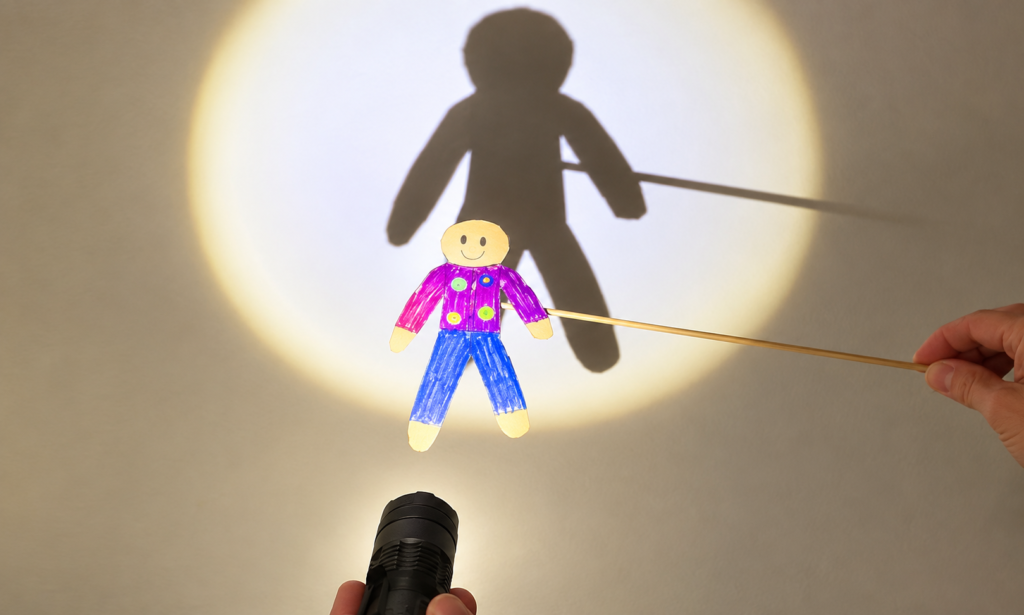
Once the flash light is out, you can take the game one step further.
Shine it toward a clear wall and make simple shapes with your hands.
Try making a bird, dog, rabbit, or funny face and ask your child to guess what it is.
Then switch roles.
Your child can make a shape while you guess.
It’s simple, costs nothing, and gives you an activity that feels special because you’re only doing it during the power cut.
Turn Favourite Toys Into Pretend Play
Sometimes the best activity is simply changing how your child uses the toys they already have.
A stuffed animal can become a patient at a pretend doctor’s office.
A doll can become a baby who needs feeding.
A toy car can drive around a homemade road made from cushions or pieces of paper.
If your child enjoys toy cars, you can create a simple pretend road around the room and let them decide where the cars are going.
Pretend play is especially useful at this age because children can use familiar objects to create stories and situations from their imagination.
Don’t Forget Simple Songs and Movement
If your child has been sitting quietly for a while, they may simply need to move.
You don’t need music from a phone or television.
Sing familiar nursery rhymes together. Add actions. March around the room. Play “Simon Says” or “Follow the Leader.”
You can also pretend to walk like different animals.
“Can you walk like a penguin?”
“Can you jump like a frog?”
“Can you crawl like a cat?”
These games give your child a chance to burn off some energy while keeping the mood positive.
How Long Can a 3-Year-Old Play Without Getting Bored?
This is where parents sometimes put too much pressure on themselves.
A three-year-old isn’t necessarily going to sit with one activity for an hour, and that’s completely normal.
One game might last five minutes. A favourite book might hold attention longer. A blanket fort could become an extended pretend-play session.
Instead of expecting one activity to carry the entire power outage, rotate between different types of play.
For example:
Quiet play → movement → snack → creative activity → pretend play → story time
That change of pace can make several hours feel much more manageable.
There’s also no need to keep your child entertained every single minute. Some independent, unstructured play is perfectly reasonable when the environment is safe.
How Do You Keep a Toddler Calm Without Screens?
For some children, the sudden darkness can be more upsetting than the boredom.
Try to keep your reaction calm and matter-of-fact.
You can simply explain:
“The electricity is off right now. We’re okay. It will come back.”
Then give your child something familiar to focus on.
A favourite stuffed animal, book, toy, or flash light can help make the unfamiliar situation feel more normal.
If power cuts happen frequently, having the same small routine every time can help too.
Get the flash light, choose an activity, have a snack, play for a while, and then settle down with a book.
Your child may eventually begin to understand that a power cut means “different play time” rather than something scary.
Are Candle-Lit Activities Safe With a 3-Year-Old?
This is one area where it’s better not to improvise.
Candles involve an open flame, and a curious three-year-old can easily reach, knock over, or touch something they shouldn’t.
The National Fire Protection Association recommends using flash lights or battery-powered lighting during power outages rather than candles. The American Red Cross also recommends having flash lights available as part of emergency preparedness.
Safer options include:
- Flash lights
- Battery-powered lanterns
- Battery-operated candles
- Glow sticks
Keep lighting equipment away from areas where your child could trip over it, and supervise your child during flashlight or lantern activities.
Create a Small Power-Cut Activity Box
If electricity goes out regularly where you live, preparation can make everything easier.
Put a few screen-free items in a small box and keep it somewhere accessible.
You might include:
- A couple of picture books
- Crayons and paper
- A simple puzzle
- Stickers
- A small toy
- Matching cards
- A flash light
Don’t put the whole box out at once.
Choose two or three things when the power goes off and save the rest for later.
That way, the activity box doesn’t become just another collection of toys your child has stopped noticing.
A Little Planning Goes a Long Way
You don’t need to plan an entire day’s worth of entertainment before every power cut.
Just having a few reliable ideas in mind can take away much of the stress.
If your child gets bored with drawing, move to pretend play.
If they become restless, try a movement game.
If they’re getting tired, switch to books or quiet play.
The important thing is flexibility.
Three-year-olds can change interests quickly, and that’s normal. Your job isn’t to keep them perfectly entertained. It’s to provide a safe environment and a few opportunities for play.
Frequently Asked Questions
What can I do with my toddler when there’s no electricity at home?
Try picture books, drawing, blanket forts, pretend play, flash light treasure hunts, shadow games, singing, movement games, or safe household objects such as plastic cups and cardboard boxes.
How long can a 3-year-old play without getting bored during a power cut?
There’s no fixed amount of time. Some activities may last only a few minutes, while others can keep a child interested much longer. Rotating between different types of play usually works better than expecting one activity to last for hours.
What household items make good toys during a power outage?
Plastic cups, large containers, measuring cups, cardboard boxes, blankets, pillows, paper, crayons, and books can all be used for simple activities. Make sure anything you provide is safe and age-appropriate.
How do I keep a toddler calm and entertained without any screens?
Stay calm, explain what’s happening, and offer familiar activities such as a favourite toy, book, song, or pretend game. Giving your child a few simple choices can also help them feel involved.
Are candle-lit activities safe to do with a 3-year-old?
Candles are not a good choice around young children during a power outage because they use an open flame. Flash lights and battery-powered lights are safer alternatives.
The Bottom Line
A power cut doesn’t have to mean a bored toddler and a stressful afternoon.
With a flash light, some paper and crayons, a few books, blankets, favourite toys, and safe household items, you can create plenty of activities to keep a 3 year old busy during a power outage without turning on a screen.
Keep your expectations realistic, switch activities when your child loses interest, and let them take the lead when possible.
And most importantly, keep safety first. Skip open flames around young children and use flash lights or battery-powered lighting instead.
If you’re looking for toys that can provide more screen-free play at home, you can explore our toy shop at KhiloneForKids.